Website development

Your company has grown, but your website hasn’t kept up. Website development is a project that should run clearly, with no surprises.

Your website looks dated and no longer matches your brand. Every small change means asking a developer. Or your last website project dragged on, and you had to chase every detail yourself.

Choosing a website partner is a decision someone at your company will have to stand behind. We’ve been building websites since 2015 and work with many clients over the long term.
Web development process

A clear process, no surprises.

Seven steps from discovery to launch, then one loop: after go-live we measure and improve, so every site keeps getting better.

  1. Discover

    Goals, users and content, mapped out.

  2. Plan

    Sitemap, CMS and scope, agreed in writing.

  3. Design

    Components that become CMS blocks.

  4. Build

    WordPress, Shopify, Drupal or Laravel.

  5. Test

    Speed, accessibility and every browser.

  6. Launch

    Go-live with redirects and analytics.

  7. Care

    Updates, backups and steady improvements.

Custom CMS blocks

What we code is what you edit

Every section is built once as a reusable component and handed over as a CMS block with plain fields, in WordPress, Shopify or Drupal.

The right platform for the people who edit it

We work with WordPress, Shopify, Drupal and Laravel, and recommend the one that fits your team and your plans, not the one that’s trending this year. We can take care of the web design too, or build from your own or your agency’s design. Website maintenance and hosting is set up from day one. If you’re moving from an old site, we plan the move with your search visibility in mind.

How website development works

  1. We start with a free conversation. We discuss your project, understand your needs and work out how we can help.
  2. We agree on a plan. Before work starts, you know the scope, timeline and price.
  3. We build it and look after it. We launch your website and then look after it: updates, security and technical support.

Easy CMS editing

Your team edits the content and the design stays intact

Every block in your CMS comes with plain fields. Change the words, pick a colour or a photo, and the layout keeps its shape.

Hero blockSaved
Background
Image

How we choose

Good fit

  • WordPress for content-heavy sites with many editors
  • Shopify for online stores that need to launch fast
  • Drupal for complex permissions and integrations
  • Laravel for bookings, quotes and accounts that follow your own rules

Think twice

  • A page builder for a site that has to last ten years
  • Custom code where a well-known platform already does the job

Page speed and accessibility

We measure page speed instead of promising it

We run Lighthouse, Core Web Vitals and WCAG checks on every launch, and fix what we find before the site goes live.

  • Performance: 95 of 100
  • Accessibility: 97 of 100
  • Best practices: 98 of 100
  • SEO: 98 of 100

Page load, first visit

Loaded in0.78 s

  1. HTML: 0.00 to 0.14 s
  2. Styles: 0.12 to 0.24 s
  3. Fonts: 0.20 to 0.40 s
  4. Hero image: 0.22 to 0.64 s
  5. Scripts: 0.30 to 0.42 s

Example values: every site is measured on its own.

Responsive web design

One website that fits every screen

The same blocks rearrange themselves for desktop, tablet and mobile, tested on real devices. Nothing is hidden, nothing is squeezed.

Website launch checklist

Everything checked before your website launches

Before the switch flips, every site runs the same checklist: redirects, SSL, forms, analytics, backups, security, speed, accessibility and monitoring. Nothing goes live on hope.

  1. Redirects mapped312 old URLs → new
  2. SSL certificateHTTPS on every page
  3. Forms testedEvery form, real inbox
  4. AnalyticsGA4 and consent banner
  5. BackupsDaily, stored off-site
  6. SecurityFirewall on, logins limited
  7. SpeedLCP 0.9 s on mobile
  8. AccessibilityWCAG 2.2 AA checked
  9. MonitoringUptime alerts switched on

Go-live

9 of 9 checks passed

StatusLive
your-site.lv

An example checklist: every project gets its own, agreed before launch.

Questions we hear

How much does a new website cost?

The price depends on what the website has to do: how many page types it needs, which systems it connects to, such as bookings, payments or a CRM, and how many languages it runs in. After a free first conversation, we agree the scope, timeline and price with you before any work starts, so there are no surprises later.

How long does a new website take?

It depends on the size of the site, the systems it connects to and how quickly content and feedback come back from your side. A site that reuses your existing texts and photos moves faster than one that needs new copy, imagery and translations. Either way, you know the timeline before work starts, because it’s part of the plan we agree together.

Can we edit the website ourselves?

Yes. Every section of your site is a block with plain fields in your CMS, so your team can change text, images and buttons without breaking the design. Before launch, we show your editors how it all works. The blocks are built around the content you actually publish, and if you need a new kind of section later, we add it as a new block.

Who owns the website?

You do. Your website and its content belong to you, whoever hosts it and whoever works on it later. Your team also gets its own CMS logins, so everyday changes don’t depend on us.

Will we lose our search rankings?

A move always carries some risk to your rankings, so we plan it before anything goes live. Every old address is redirected to its new page, so visitors and search engines land where they should instead of on an error page. After launch, we keep an eye on the search results and look into any page that drops.

Do you have experience with public tenders?

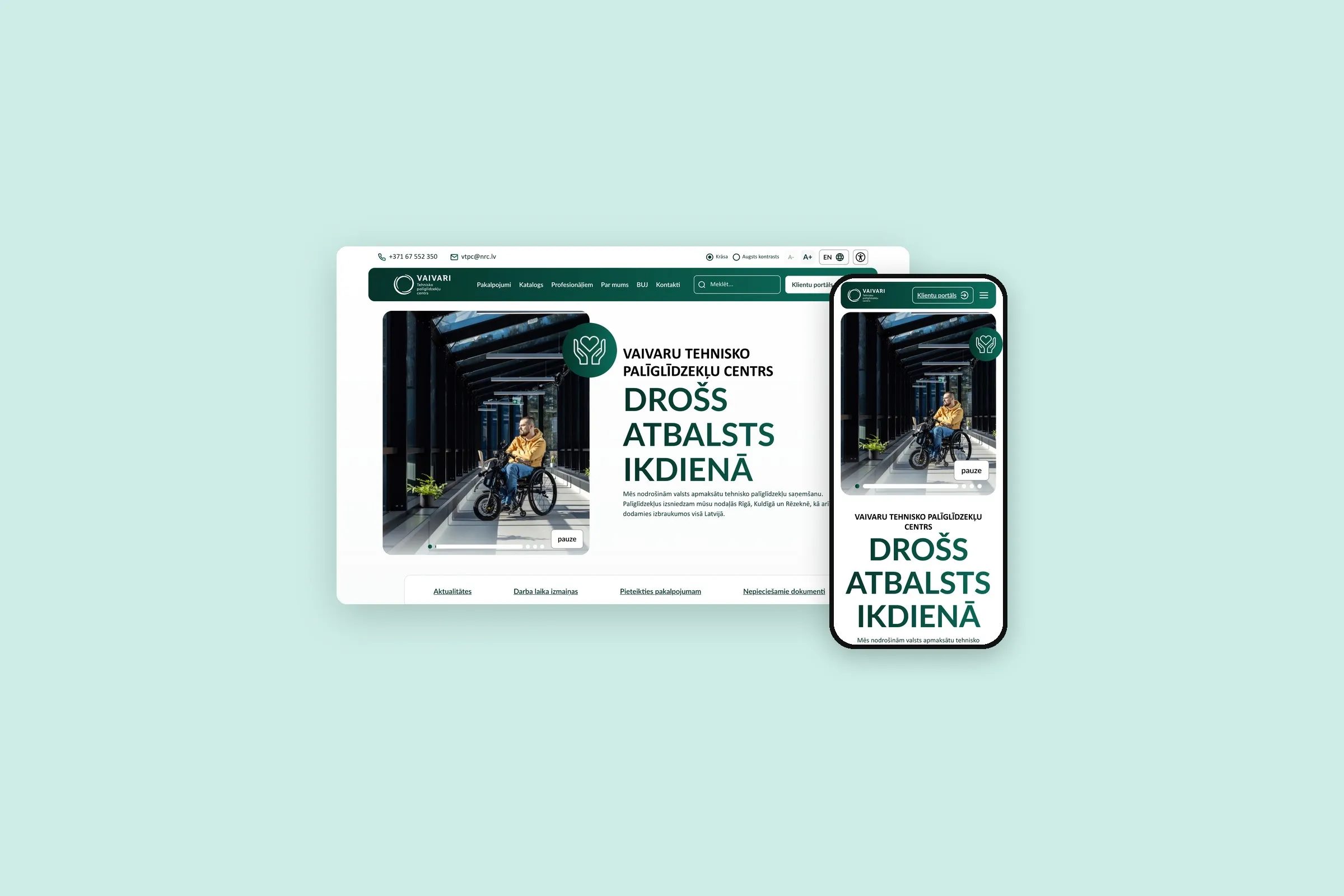
Yes. We built the VTPC website from scratch through a public tender, and the public sector is one of the areas we work in. Send us the tender documents, tell us what you need, and we’ll see how we can help.