Google Ads vs SEO is often the first marketing choice a small business faces once its website is live. Ads can put you at the top of Google today, for as long as you keep paying. SEO earns a place in the organic results that builds slowly but stays. Here's how each works, what each costs and how to decide where your budget goes first.
How do Google Ads and SEO work?
Google Ads is paid advertising in Google's search results: you pick the searches your ad should appear for, set a budget and pay when people click. SEO, or search engine optimization, is the work on your website and content that helps Google understand it and show it in the organic results, where nobody pays for a click.
Both appear on the same results page and answer the same person's question. What differs is how you get there and how long you stay.
Google Ads: an auction on every search
Every time someone searches, Google runs an auction among the advertisers who want that search. It weighs your bid, the quality of your ad and of the page it leads to, the context of the search (the words, location, device and time) and how many competitors want the same spot. Together, these decide whether your ad appears and where.
The highest bid doesn't automatically win. In its explanation of how the Google Ads auction works, Google says relevant keywords, ads and assets can win a higher position at a lower price, even against higher bids. That's why an ad should lead to a page that answers the exact search, not to your homepage.
SEO: a place you can't buy
SEO is the work on what Google sees on your site: content that answers your customers' questions, a clear page structure, useful headings and a clean technical base, so your pages can be found and indexed. Google describes SEO as helping search engines understand your content and helping people find your site.
You can't pay your way into the organic results. Google's guide Do you need an SEO? says it never accepts money to include or rank sites, and that no one can guarantee a #1 ranking. If someone promises you first place on Google, ask exactly how they plan to get it.
| Criterion | Google Ads | SEO |
|---|---|---|
| Where it shows | Ad slots in the search results | The organic search results |
| What you pay for | Clicks, priced by an auction | Work: content, technical fixes, time |
| When results show | Once the campaign is running | From a few hours to several months |
| When you stop | The ad stops showing | Pages stay; positions change gradually |
| What you control | Searches, budget, region, schedule | Content and quality; Google decides the ranking |
| Guarantees | Position depends on the auction | No one can guarantee first place |
How fast do you see results?
Google Ads can bring visitors as soon as your campaign is approved and running, provided your bid and budget hold up in the auction. SEO takes patience. Google's SEO Starter Guide says some changes take effect in a few hours and others take several months, and suggests waiting a few weeks before judging whether your work helped.
The bigger difference is what happens afterwards. Ad traffic lasts exactly as long as you pay for it: when the budget runs out or you pause the campaign, those visitors stop coming. SEO work adds up. A page that answers a customer's question well can keep bringing visitors long after you publish it.
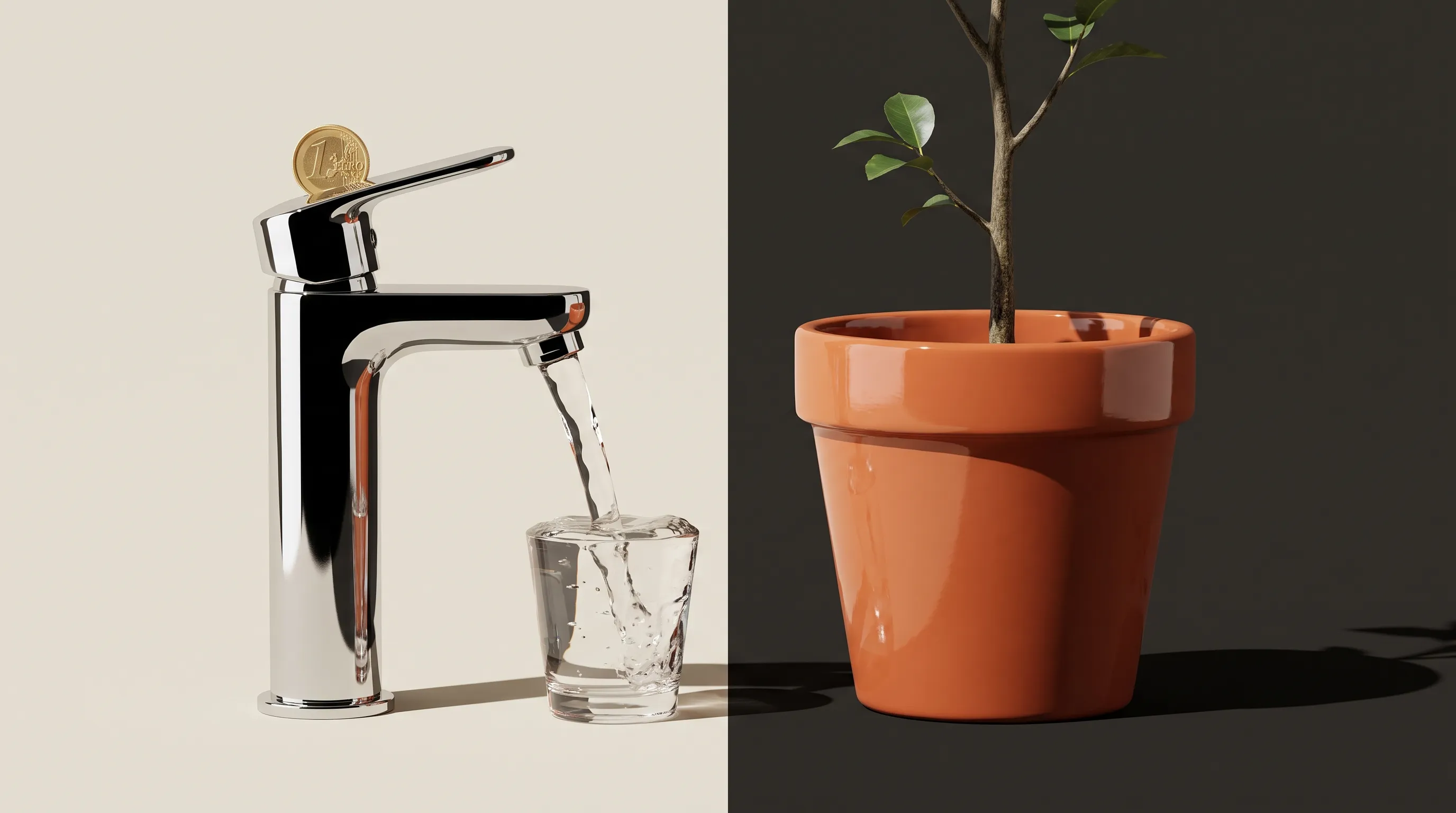
Think of ads as renting space and SEO as owning it. Renting gets you in tomorrow, but only while you pay. Owning takes longer to build and needs upkeep, but it stays yours.
How much do Google Ads and SEO cost?
Google Ads has no fixed price. You set an average daily budget and, if you bid manually, the most you'd pay for one click. The auction sets the actual cost per click, and Google notes it's often less than your maximum bid. Competition, the quality of your ad and landing page, and the context of each search all move the price.
Your budget works as a monthly ceiling. On a busy day Google may spend up to twice your average daily budget, but in a month it won't charge more than 30.4 times that amount. With an average daily budget of €10, the most you'd pay in a month is €304. Google sets this out on its page on managing your spend in Google Ads.
There are no cost-per-click figures in this article, because they vary by industry, search term and competition. The most reliable numbers are the ones in your own Google Ads account.
What does SEO cost?
Google charges nothing for SEO: not for the position and not for the clicks. The cost is the work. That means pages that answer your customers' questions, technical fixes and new articles over time, done by you, your team or a partner. Unlike ads, that cost doesn't grow with every visitor, but the return arrives later.
What SEO costs for your business depends on how many pages your site has, its technical state and how much new content you need, so a fair price is only possible once someone has looked at the site. If you'd rather not do it alone, that's the work our SEO and content service is for.
Google Ads vs SEO: which is better for your business?
Choose Google Ads when you need customers now: a new business, a new service, a seasonal offer or a promotion with an end date. Choose SEO when your customers keep searching the same questions and you can invest a few months before it pays back. If both descriptions fit, you probably need both.
Google Ads
Pros
- Visitors as soon as the campaign runs
- You choose the searches, region, schedule and budget
- Shows quickly which searches bring enquiries
- Suits seasonal offers and promotions
Cons
- You pay for every click
- Traffic stops when the budget does
- Competitors in the auction push the price up
- Campaigns need regular attention
SEO
Pros
- No fee per click
- A good page can bring visitors for a long time
- The work adds up and stays when spending stops
- The same pages help your ads too
Cons
- Results take weeks or months
- No one can guarantee first place
- Needs steady work on content
- Google updates can shift your position
Why do businesses combine Google Ads and SEO?
Ads and SEO solve different problems, so they work well together. Ads bring in customers while SEO is still growing, and SEO gradually makes you less dependent on paying for each visitor. Both rely on the same thing: a page that clearly answers what the person searched for.
The Google Ads auction looks at the quality of the page your ad leads to, so a page built well for SEO helps your ads too. It works the other way as well. Ad data shows quickly which searches bring calls and enquiries, and those searches are worth turning into pages and articles, so that over time the same customers find you in the organic results.
Just don't expect ads to lift your organic rankings. Google states that advertising has no effect on a site's presence in its search results, so treat them as two channels even when they share pages. Clear pages also help when people ask AI tools instead of searching, which is what generative engine optimization is about.
Where should a small business start?
A small business doesn't have to choose once and for all. Start with a website that clearly answers your customers' questions, because neither ads nor SEO work without it. Then decide based on how soon you need customers and how long you can wait for a return.
- Write down your customers' questions. The ones you hear on the phone, by email and in person. These are your searches.
- Check your pages. Each service needs its own page that answers those questions and makes it easy to get in touch.
- If you need customers now, start with a small ad campaign. Pick a few precise searches and a modest budget, and check the results daily at first.
- Start SEO alongside it. Write pages or articles on the questions customers ask most.
- Compare after a few months. Look at where enquiries actually come from and move the budget to what works.
Frequently asked questions
Is Google Ads or SEO better for a small business?
Neither is better in general. Google Ads is faster: visitors arrive as soon as a campaign is running, but only while you pay. SEO is slower, with changes taking from a few hours to several months to show, but there's no fee per click and the work stays. If you need customers this month, start with ads; if you can wait, invest in SEO. Many businesses run both.
How much does Google Ads cost per month?
You decide. You set an average daily budget, and Google won't charge more than 30.4 times that amount in a month, so €10 a day means at most €304. On a single day, spend can reach twice the daily budget. What you pay per click is set by the auction and is often below your maximum bid.
Do Google Ads improve SEO rankings?
No. Google says it never accepts money to include or rank sites in its search results, and that advertising has no effect on a site's presence there. Ads help SEO only indirectly: their data shows which searches bring customers, and you can write pages for those searches that later show up in the organic results on their own.
How long does SEO take to work?
It depends on the change. Google's SEO Starter Guide says some changes take effect within a few hours and others take several months, and suggests waiting a few weeks before judging the result. No one can guarantee a #1 ranking, so judge SEO by enquiries and visitors over time, not by one keyword on one day.
Is SEO free?
Google charges nothing for organic rankings, but SEO isn't free. It takes time or budget for content, technical fixes and new articles. The difference from ads is that you don't pay for every click, and a well-written page can keep bringing visitors long after it's published.